
Velma Jones, LCSW
New York · 29 yrs exp
Works with Stress, Anxiety / Relationship / Trauma and abuse +11
Works by Attachment-Based Therapy / Client-Centered Therapy
View ProfileThe therapist listings are provided by BetterHelp and we will earn a commission if you use our link - at no cost to you.
Solution-Focused Therapy is a brief, goal-oriented approach that emphasizes your strengths and practical steps toward change rather than focusing extensively on past problems. Below you can browse LCSW clinicians who list Solution-Focused Therapy among their approaches and read details to help guide your next step.
New York · 29 yrs exp
Works with Stress, Anxiety / Relationship / Trauma and abuse +11
Works by Attachment-Based Therapy / Client-Centered Therapy
View Profile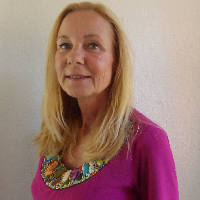
North Carolina · 30 yrs exp · 2 languages
Works with Relationship / Parenting / Anger +6
Works by Cognitive Behavioral Therapy (CBT) / Mindfulness Therapy
View Profile
Colorado · 19 yrs exp · 2 languages
Works with Stress, Anxiety / Relationship / Trauma and abuse +13
Works by Somatic Therapy / Acceptance and Commitment Therapy (ACT)
View Profile
Texas · 13 yrs exp
Works with Stress, Anxiety / Relationship / Trauma and abuse +12
Works by Attachment-Based Therapy / Client-Centered Therapy
View Profile
North Carolina · 21 yrs exp
Works with Stress, Anxiety / Grief / Eating +13
Works by Acceptance and Commitment Therapy (ACT) / Client-Centered Therapy
View Profile
New Jersey · 15 yrs exp
Works with Stress, Anxiety / Family / Trauma and abuse +11
Works by Cognitive Behavioral Therapy (CBT) / Psychodynamic Therapy
View Profile
New York · 24 yrs exp
Works with Stress, Anxiety / Relationship / Anger +13
Works by Client-Centered Therapy / Cognitive Behavioral Therapy (CBT)
View Profile
Oregon · 26 yrs exp
Works with Stress, Anxiety / Trauma and abuse / Grief +11
Works by Somatic Therapy / Acceptance and Commitment Therapy (ACT)
View Profile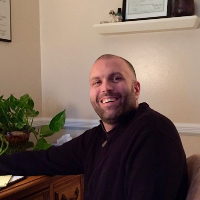
South Carolina · 14 yrs exp
Works with Stress, Anxiety / Parenting / Depression +15
Works by Client-Centered Therapy / Solution-Focused Therapy
View Profile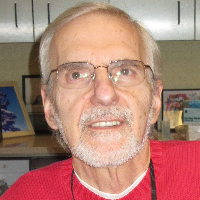
Illinois · 30 yrs exp
Works with Trauma and abuse / Grief / Self esteem +15
Works by Client-Centered Therapy / Cognitive Behavioral Therapy (CBT)
View Profile
New York · 25 yrs exp · 2 languages
Works with Stress, Anxiety / Addictions / Trauma and abuse +12
Works by Client-Centered Therapy / Cognitive Behavioral Therapy (CBT)
View Profile
Texas · 6 yrs exp
Works with LGBT / Relationship / Family +7
Works by Acceptance and Commitment Therapy (ACT) / Attachment-Based Therapy
View Profile
Missouri · 16 yrs exp
Works with Stress, Anxiety / Trauma and abuse / Self esteem +13
Works by Client-Centered Therapy / Cognitive Behavioral Therapy (CBT)
View Profile
North Carolina · 10 yrs exp
Works with Stress, Anxiety / Relationship / Family +17
Works by Acceptance and Commitment Therapy (ACT) / Client-Centered Therapy
View Profile
New York · 35 yrs exp
Works with Stress, Anxiety / Self esteem / Career +11
Works by Client-Centered Therapy / Mindfulness Therapy
View Profile
Kentucky · 10 yrs exp
Works with Stress, Anxiety / Family / Self esteem +13
Works by Acceptance and Commitment Therapy (ACT) / Client-Centered Therapy
View Profile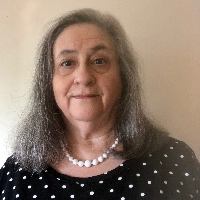
Mississippi · 23 yrs exp
Works with Stress, Anxiety / Grief / Anger +9
Works by Cognitive Behavioral Therapy (CBT) / Mindfulness Therapy
View Profile
New Jersey · 22 yrs exp
Works with Stress, Anxiety / LGBT / Relationship +11
Works by Acceptance and Commitment Therapy (ACT) / Attachment-Based Therapy
View Profile
Florida · 10 yrs exp
Works with Stress, Anxiety / Addictions / Family +9
Works by Client-Centered Therapy / Cognitive Behavioral Therapy (CBT)
View Profile
Texas · 21 yrs exp
Works with Stress, Anxiety / Relationship / Trauma and abuse +16
Works by Acceptance and Commitment Therapy (ACT) / Client-Centered Therapy
View Profile
Illinois · 12 yrs exp
Works with Stress, Anxiety / Trauma and abuse / Parenting +13
Works by Client-Centered Therapy / Cognitive Behavioral Therapy (CBT)
View Profile
Florida · 22 yrs exp
Works with Stress, Anxiety / Self esteem / Depression +6
Works by Acceptance and Commitment Therapy (ACT) / Client-Centered Therapy
View Profile
Illinois · 25 yrs exp
Works with Stress, Anxiety / Self esteem / Career +11
Works by Client-Centered Therapy / Cognitive Behavioral Therapy (CBT)
View Profile
Florida · 30 yrs exp
Works with Stress, Anxiety / Relationship / Intimacy-related issues +9
Works by Client-Centered Therapy / Cognitive Behavioral Therapy (CBT)
View Profile
Mississippi · 12 yrs exp
Works with Stress, Anxiety / Addictions / Anger +13
Works by Client-Centered Therapy / Cognitive Behavioral Therapy (CBT)
View Profile
Virginia · 31 yrs exp
Works with Stress, Anxiety / Relationship / Family +13
Works by Attachment-Based Therapy / Client-Centered Therapy
View Profile
North Carolina · 30 yrs exp
Works with LGBT / Relationship / Family +14
Works by Acceptance and Commitment Therapy (ACT) / Attachment-Based Therapy
View Profile
Georgia · 25 yrs exp
Works with Stress, Anxiety / Parenting / Anger +16
Works by Attachment-Based Therapy / Client-Centered Therapy
View Profile
North Carolina · 30 yrs exp
Works with Stress, Anxiety / Relationship / Family +11
Works by Client-Centered Therapy / Cognitive Behavioral Therapy (CBT)
View Profile
Florida · 14 yrs exp
Works with Stress, Anxiety / Trauma and abuse / Grief +14
Works by Cognitive Behavioral Therapy (CBT) / Dialectical Behavior Therapy (DBT)
View Profile
Texas · 20 yrs exp
Works with Stress, Anxiety / Addictions / Family +16
Works by Client-Centered Therapy / Cognitive Behavioral Therapy (CBT)
View Profile
Pennsylvania · 38 yrs exp
Works with Stress, Anxiety / Grief / Depression +8
Works by Client-Centered Therapy / Cognitive Behavioral Therapy (CBT)
View Profile
Virginia · 47 yrs exp
Works with Stress, Anxiety / Relationship / Grief +11
Works by Somatic Therapy / Acceptance and Commitment Therapy (ACT)
View Profile
Florida · 10 yrs exp
Works with Stress, Anxiety / Trauma and abuse / Grief +13
Works by Client-Centered Therapy / Cognitive Behavioral Therapy (CBT)
View Profile
Illinois · 20 yrs exp
Works with Stress, Anxiety / Grief / Self esteem +12
Works by Client-Centered Therapy / Cognitive Behavioral Therapy (CBT)
View Profile
Michigan · 24 yrs exp
Works with Stress, Anxiety / Addictions / Relationship +2
Works by Client-Centered Therapy / Cognitive Behavioral Therapy (CBT)
View Profile
Delaware · 28 yrs exp · 2 languages
Works with Stress, Anxiety / Family / Self esteem +12
Works by Acceptance and Commitment Therapy (ACT) / Client-Centered Therapy
View Profile
Alaska · 11 yrs exp
Works with Stress, Anxiety / Relationship / Family +10
Works by Client-Centered Therapy / Cognitive Behavioral Therapy (CBT)
View Profile
Arkansas · 44 yrs exp
Works with Stress, Anxiety / Trauma and abuse / Grief +17
Works by Acceptance and Commitment Therapy (ACT) / Client-Centered Therapy
View Profile
Missouri · 35 yrs exp
Works with Stress, Anxiety / Trauma and abuse / Anger +14
Works by Acceptance and Commitment Therapy (ACT) / Client-Centered Therapy
View Profile
North Carolina · 16 yrs exp
Works with Stress, Anxiety / Addictions / Trauma and abuse +14
Works by Acceptance and Commitment Therapy (ACT) / Client-Centered Therapy
View Profile
New Mexico · 20 yrs exp
Works with Stress, Anxiety / Self esteem / Bipolar +9
Works by Acceptance and Commitment Therapy (ACT) / Client-Centered Therapy
View Profile
Mississippi · 36 yrs exp
Works with Family / Parenting / Anger +12
Works by Acceptance and Commitment Therapy (ACT) / Attachment-Based Therapy
View Profile
Florida · 28 yrs exp · 3 languages
Works with Stress, Anxiety / Addictions / Trauma and abuse +14
Works by Acceptance and Commitment Therapy (ACT) / Attachment-Based Therapy
View Profile
Florida · 20 yrs exp
Works with Stress, Anxiety / Trauma and abuse / Grief +13
Works by Client-Centered Therapy / Cognitive Behavioral Therapy (CBT)
View Profile
New York · 14 yrs exp
Works with Stress, Anxiety / Relationship / Trauma and abuse +6
Works by Acceptance and Commitment Therapy (ACT) / Client-Centered Therapy
View Profile
Missouri · 25 yrs exp
Works with Stress, Anxiety / Addictions / Parenting +13
Works by Client-Centered Therapy / Cognitive Behavioral Therapy (CBT)
View Profile
Colorado · 15 yrs exp
Works with Stress, Anxiety / Grief / Depression +11
Works by Acceptance and Commitment Therapy (ACT) / Client-Centered Therapy
View ProfileSolution-Focused Therapy centers on the idea that you already have resources and abilities that can be mobilized to create meaningful change. Rather than exploring the origin of problems in depth, this approach helps you articulate clear, achievable goals and identify small, repeatable actions that move you toward those goals. The therapy often proceeds by asking questions that highlight exceptions to the problem - times when the difficulty is less severe or absent - and by working to amplify the conditions that produced those exceptions.
Core principles include a future-oriented focus, the assumption that change is constant and possible, and an emphasis on collaboration between you and the clinician. You are invited to define what success looks like in concrete terms, and sessions commonly map out specific steps you can try between meetings. This makes the approach practical and adaptable to many life circumstances, particularly when you want targeted progress within a limited timeframe.
When an LCSW lists Solution-Focused Therapy among their approaches, it comes alongside the social work perspective that examines you in the context of your environment. Social work training brings attention to housing, work, family, finances, community resources, and access to services as part of understanding what shapes your experience. That person-in-environment lens can be especially useful when practical barriers or systemic factors influence the goals you set and the steps needed to reach them.
Solution-Focused Therapy is commonly used for short- to medium-term concerns where clear goals can be articulated. People often try this approach for relationship difficulties, communication challenges, stress management, and transitions such as career changes or parenting adjustments. Because the work tends to be forward-looking and pragmatic, it can be helpful when you want skills and strategies to change day-to-day patterns rather than deep exploration of trauma or long-standing personality patterns.
You may also find it useful for problem-solving around specific situations - for example, developing a plan to improve sleep routines, advance in a job search, or set boundaries in a family relationship. The approach is flexible and may be integrated with other methods by clinicians who list it among their approaches. Keep in mind that the directory indicates which LCSW clinicians include Solution-Focused Therapy on their profiles, but it does not verify the depth of experience in any one approach.
If you are seeking intensive work on longstanding developmental trauma, complex psychiatric conditions, or deeply rooted relational patterns, you might prefer approaches that allocate more time to exploring history or underlying dynamics. That said, some people combine goal-focused SFT work with other therapeutic approaches over time. Discussing how an LCSW frames their use of Solution-Focused Therapy can help you understand whether their emphasis aligns with what you want from therapy.
A typical Solution-Focused Therapy session is conversational and structured around practical questions. At the start, you and the LCSW will usually clarify the goal for your work together - what a preferred future would look like and how you will notice progress. The clinician may ask about exceptions - times when the problem is less present - and what was different in those moments. This helps identify strategies that have worked before and can be repeated.
Sessions often include scaling questions that ask you to rate where you are now on a scale from zero to ten. These ratings become reference points for tracking progress and planning next steps. The clinician and you will co-create small, concrete tasks to try between sessions. Follow-up meetings then review what happened, refine strategies, and set new micro-goals. The rhythm is iterative: test actions, evaluate results, and build what works.
In practice, you should expect a collaborative tone, focused homework or experiments, and regular checks on progress. The approach values your expertise about your life and treats the clinician as a guide who helps you apply your own strengths more effectively. If you value measurable progress and hands-on strategies, sessions like these can feel empowering and efficient.
Solution-Focused Therapy differs from many other approaches in its emphasis on pragmatic change and brief intervention. Where psychodynamic or psychoanalytic approaches concentrate on uncovering unconscious patterns and exploring historical roots of difficulties, Solution-Focused Therapy directs attention to what you want to achieve now and how you can move toward it. Cognitive-behavioral methods also focus on present functioning and strategies, but Solution-Focused Therapy tends to be less didactic and more oriented to eliciting your own solutions rather than teaching specific cognitive techniques.
Compared with approaches that systematically dissect thought patterns or family-of-origin problems, Solution-Focused Therapy is typically shorter in duration and more narrowly targeted. That does not mean it is superficial; rather, it is deliberately focused on actionable change. Many clinicians integrate ideas from different schools, so when you review an LCSW profile you may see Solution-Focused Therapy listed alongside other approaches. This can indicate a flexible practice style where pragmatic goal-setting is used in combination with other methods.
The language in Solution-Focused Therapy is often optimistic and outcome-oriented. Questions are framed to spotlight progress and possibility rather than deficits. For someone who finds exploratory models overwhelming or who wants a clear roadmap, the pacing and phrasing of this approach can feel refreshing and motivating.
You might be a good candidate for Solution-Focused Therapy if you are looking for concrete, attainable change in specific areas of your life and prefer practical steps over extended exploration of past events. If you value measurable progress, collaborative planning, and short- to medium-term engagement, this approach may align well with your goals. It can be particularly effective if you are juggling everyday stressors and want tools that fit into your busy life.
When looking for an LCSW who lists Solution-Focused Therapy among their approaches, pay attention to the professional details that matter to you. The LCSW credential indicates that the clinician holds a master's degree in social work, completed a state-set period of supervised post-graduate clinical experience, and passed a clinical licensing examination. Licensing is issued and regulated by each state board, so scope of practice and title can vary by state. The social work perspective - a focus on person-in-environment - may be valuable if you want a clinician who considers how housing, work, family, income, community, and access to services shape your situation.
On profile pages you can compare focus areas, stated approaches, languages spoken, and years of experience. Look for descriptions that resonate with how you want to work - whether that means short-term goal-setting, coaching-style support, or combining practical strategies with attention to environmental factors. Remember that the directory shows clinicians who list Solution-Focused Therapy among their approaches; it does not verify the extent of experience with any single modality. Reaching out to an LCSW to ask how they use Solution-Focused ideas in their practice can give you a clearer sense of fit before you engage.
Choosing an LCSW is a personal process. Think about the pace you prefer, the kinds of goals you want to pursue, and whether you value a strong emphasis on practical problem solving alongside attention to life circumstances. If the social work lens and a goal-focused method appeal to you, reviewing profiles of LCSWs who list Solution-Focused Therapy among their approaches can be a good way to identify clinicians whose stated priorities align with your needs.
Ultimately, the most important factor is that you feel understood and that the planned work matches what you hope to change. Use the directory to explore options, read how clinicians describe their approach, and choose a path that fits the kind of progress you want to make.
Alabama
26 therapists
Alaska
19 therapists
Arizona
115 therapists
Arkansas
68 therapists
California
989 therapists
Colorado
177 therapists
Connecticut
133 therapists
Delaware
42 therapists
District of Columbia
8 therapists
Florida
982 therapists
Georgia
268 therapists
Hawaii
39 therapists
Idaho
50 therapists
Illinois
450 therapists
Indiana
247 therapists
Iowa
9 therapists
Kansas
33 therapists
Kentucky
166 therapists
Louisiana
165 therapists
Maine
66 therapists
Maryland
29 therapists
Massachusetts
17 therapists
Michigan
43 therapists
Minnesota
16 therapists
Mississippi
86 therapists
Missouri
188 therapists
Montana
62 therapists
Nebraska
2 therapists
Nevada
71 therapists
New Hampshire
24 therapists
New Jersey
300 therapists
New Mexico
69 therapists
New York
659 therapists
North Carolina
441 therapists
North Dakota
12 therapists
Ohio
39 therapists
Oklahoma
87 therapists
Oregon
78 therapists
Pennsylvania
272 therapists
Rhode Island
4 therapists
South Carolina
45 therapists
South Dakota
2 therapists
Tennessee
134 therapists
Texas
617 therapists
Utah
121 therapists
Vermont
3 therapists
Virginia
232 therapists
Washington
20 therapists
West Virginia
9 therapists
Wisconsin
161 therapists
Wyoming
22 therapists